
Bald spots can be a source of concern for many individuals, impacting both appearance and self-esteem. Understanding the various causes of bald spots and the available treatment options can empower those affected to take control of their hair health.
1. The Causes of Bald Spots
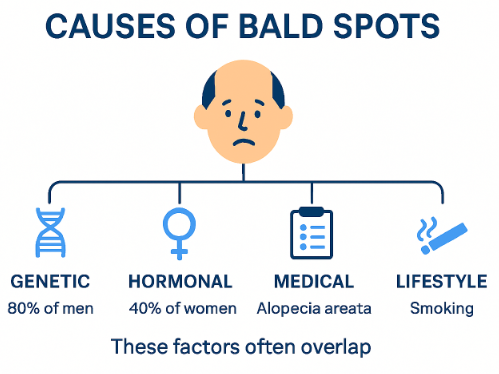
Bald spots can occur for a variety of reasons. One common cause is alopecia areata, an autoimmune condition where the body mistakenly attacks hair follicles, leading to sudden hair loss in patches. Other causes include fungal infections, such as tinea capitis, which can result in localized thinning and eventual baldness if untreated. Genetic predispositions also play a significant role; male pattern baldness is largely hereditary and can manifest as receding hairlines or thinning on the crown of the head.
Stress and poor nutrition can exacerbate or even initiate hair loss. For instance, stress-induced telogen effluvium is a temporary form of hair loss that occurs after experiencing significant stress. Dietary deficiencies—particularly in iron, biotin, and zinc—can also weaken hair and contribute to thinning. Understanding the underlying cause of bald spots is essential for determining the best course of action to address them.
-
- Consult a dermatologist for diagnosis and treatment options.
-
- Maintain a balanced diet rich in vitamins and minerals.
-
- Manage stress through activities like yoga or meditation.
-
- Track changes in hair health over time with photographs.
2. Treatment Options for Bald Spots
When it comes to treating bald spots, several options are available depending on the underlying cause. Topical treatments containing minoxidil, commonly known as Rogaine, have been effective for many individuals experiencing androgenetic alopecia. For those with autoimmune conditions like alopecia areata, corticosteroid injections may help reduce inflammation and promote hair regrowth.
Additionally, alternative treatments such as essential oils (like rosemary or peppermint) and laser therapy are gaining popularity. While more research is needed, some users have reported success with these methods. It’s important to remember that results can vary, so it may require some experimentation to find the right treatment for your specific condition.
-
- Research and choose FDA-approved treatments.
-
- Consider consulting a trichologist for specialized care.
-
- Stay consistent with treatments for best results; give them time.
-
- Combine treatments with a healthy lifestyle for maximum impact.
3. Prevention Strategies for Hair Loss
Preventing bald spots often starts with a proactive approach to hair and overall health. Regular scalp massages can increase blood circulation, promoting growth and preventing follicle miniaturization. Additionally, avoiding harsh chemical treatments and heat styling can protect hair integrity and minimize damage.
Avoiding tight hairstyles that pull on the hair shaft, such as ponytails or braids, is also essential. These styles can cause traction alopecia, a condition characterized by hair loss due to constant tension on the hair. Additionally, reducing stress and ensuring adequate nutrition can be significant factors in maintaining hair health. By prioritizing prevention, individuals can help reduce the likelihood of developing bald spots in the future.
-
- Choose gentle hair care products suited for your hair type.
-
- Limit heat exposure from styling tools.
-
- Incorporate regular scalp massages into your routine.
-
- Practice healthy habits for managing stress.
In conclusion, addressing bald spots involves understanding their causes and exploring treatment options tailored to individual needs. If you’re facing this challenge, consider consulting a professional to assess your situation and develop a personalized plan. Remember, early intervention can make a significant difference in your hair health journey.